
Stéphane Muños
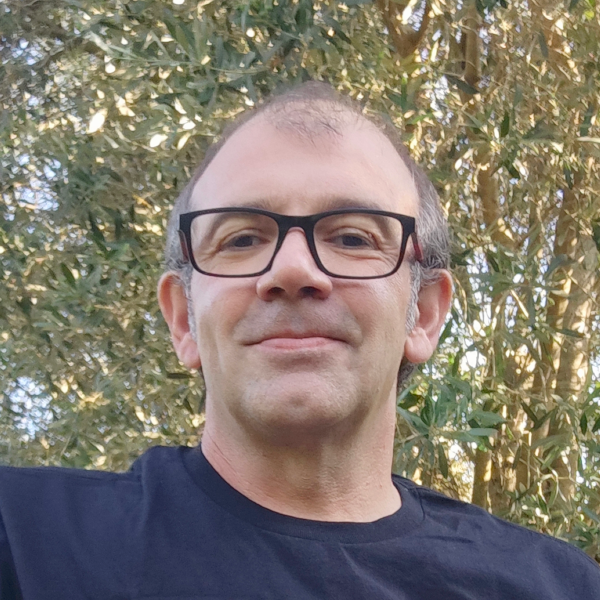
Stéphane Munos began his university studies at the University of Toulouse Paul Sabatier in 1995, specializing in plant biotechnology. During his studies, he completed two internships at Novartis Seeds (now Syngenta Seeds, France). He first worked on rapeseed transformation under the supervision of Jan Gielen and subsequently developed PCR markers for marker-assisted selection of sunflower downy mildew resistance under the supervision of Fermin Azanza.
In 2002, Stéphane obtained his PhD in Plant Molecular Physiology from the University of Montpellier. His doctoral research, carried out under the supervision of Alain Gojon at INRAE, focused on the regulation of nitrogen transporters in Arabidopsis thaliana. He notably described the long-distance regulation of nitrate transporters in response to nitrogen starvation (Gansel, Munos et al., 2001). He also applied the Serial Analysis of Gene Expression (SAGE) technique (Fizames et al., 2004; Munos et al., 2004), the first sequencing-based method for high-throughput gene expression profiling. Towards the end of his PhD, he hypothesized that the nitrate transporter NRT1.1 functions not only as a transporter but also as a nitrate sensor (Munos et al., 2001). This hypothesis was later confirmed, and the underlying molecular mechanism was subsequently elucidated.
On 2003, Stéphane joined INRAE in Avignon, where he expanded his expertise in molecular and quantitative genetics. His research focused primarily on tomato fruit morphology and genetic diversity. He cloned the lcn2.1 quantitative trait locus (QTL) controlling locule number in tomato fruits (Munos et al., 2011) and proposed that the expression of this locus (the WUSCHEL gene) was required for the activity of another locus, fasciated, which enhances the same phenotypic trait. Several years later, advances in CRISPR-Cas9 genome editing enabled the molecular basis of the interaction between lcn2.1 (later renamed lc) and fasciated to be fully characterized. During this period, he also investigated the genetic diversity of cultivated tomato (Ranc et al., 2008; Ranc et al., 2012; Xu et al., 2012; Bauchet et al., 2014).
In 2011, Stéphane joined Patrick Vincourt’s research group at INRAE Toulouse to work on sunflower genomics and genetics. The group was primarily focused on resistance to downy mildew and drought tolerance. It was also responsible for maintaining sunflower genetic resources and developing numerous mapping populations for the identification of agronomically important traits. His initial research focused on apical branching, a key trait for the production of commercial hybrid seed. He identified the genomic region controlling this characteristic and developed molecular markers that were subsequently used to establish a large multiparental population as part of the International Sunflower Genome Consortium coordinated by Loren Rieseberg (University of British Columbia, Canada).
Stéphane was responsible for the genomics component of the French SUNRISE project, initiated and coordinated for several years by Patrick Vincourt. This project contributed significantly to the sequencing of the sunflower reference genome. He developed two high-density genotyping arrays, one capable of simultaneously genotyping nearly 600,000 SNPs and another allowing the analysis of 50,000 SNPs across 384 samples. These arrays were extensively used both by the project’s industrial partners and by numerous research programs.
Using data generated through both the International Sunflower Genome Consortium and the SUNRISE project, Stéphane contributed to the publication of the sunflower reference genome sequence in 2017 (Badouin et al., 2017).
He subsequently became coordinator of the International Sunflower Genome Consortium. To increase the consortium’s visibility, he designed its official logo, which was later used by consortium members during international conferences. Together with collaborators from the University of British Columbia (Loren Rieseberg, Canada), the University of Georgia (John Burke, USA), MIGAL Research Institute (Sariel Hübner, Israel), the University of California, Berkeley (Ben Blackman, USA), and INRAE (France), he helped develop a second international research program.
In addition to the five public research partners, the consortium brought together the world’s eight leading sunflower seed companies. The project’s objectives were to develop and characterize new genetic and genomic resources, investigate gene expression under contrasting environmental conditions, and evaluate methods for sunflower genetic transformation. Although the initial goal was to sequence the genomes of three cultivated sunflower lines, the project ultimately generated 37 genome assemblies, including those of nine wild Helianthus species closely related to cultivated sunflower. These resources have become fundamental references for sunflower genetics and genomics.
In parallel with his genomics research, Stéphane initiated a new research program at INRAE in 2013 focusing on the interaction between sunflower and the parasitic plant Orobanche cumana (commonly known as sunflower broomrape). He subsequently led the Sunflower Pests Interactions research group. From the outset of this program, he established a close collaboration with Begoña Pérez-Vich and Leonardo Velasco (IAS-CSIC, Spain).
The life cycle of sunflower broomrape is highly unusual. Its seeds do not germinate spontaneously but instead require chemical signals released by sunflower roots to trigger germination. Furthermore, the parasite lacks functional roots and is non-photosynthetic, making it entirely dependent on its host throughout its life cycle.
Stéphane first identified quantitative resistance factors acting at each stage of the parasite’s life cycle (Louarn et al., 2016). Together with his PhD student Pauline Duriez (co-supervised with Joël Piquemal, Syngenta Seeds), he identified the first sunflower resistance gene against broomrape, HaOr7, encoding a leucine-rich repeat receptor-like kinase (LRR-RLK) (Duriez et al., 2019). He subsequently contributed to the characterization of two additional resistance genes (Pubert et al., 2024; Fernández-Melero et al., 2026).
He also used genome-wide association studies (GWAS) to identify genomic loci involved in broomrape resistance (Calderón-González et al., 2023). In collaboration with Mireille Chabaud from his research group, he developed cytological approaches to characterize parasite penetration into sunflower roots (Auriac et al., 2023) and to investigate the associated defence mechanisms (Chabaud et al., 2022). He also contributed to the identification of potential regulatory micropeptides involved in sunflower resistance to broomrape (Tourneur et al., 2024).
More recently, he coordinated a collaborative project involving five partners, whose first results led to the characterization of receptor proteins involved in the perception of the germination stimulants released by sunflower roots that induce broomrape seed germination (Affholder et al., 2026).
Stéphane subsequently turned his attention to the identification of avirulence genes in O. cumana (Calderón-González et al., 2024). To achieve this, he contributed to the construction of the first genetic linkage map of the parasite (Calderón-González et al., 2019) and sequenced the O. cumana genome. He also initiated a collaborative project involving IAS-CSIC (Spain) and Syngenta Seeds, combining genetics and yeast two-hybrid approaches to identify the parasite avirulence gene interacting with the sunflower resistance gene HaOr7.
In addition to these studies, Stéphane contributed to research on sunflower resistance to downy mildew (Gascuel et al.; Pecrix et al., 2018).
Throughout all these projects, he has consistently relied on the extensive genetic diversity found in both sunflower and Orobanche cumana to investigate the genetic basis of plant–parasite interactions.
Beyond his scientific contributions, Stéphane played a key role in bringing together the international community working on sunflower genetics and broomrape resistance. He also actively promoted research on sunflower broomrape by participating in the meetings of the International Parasitic Plant Society, of which he was a member.
Since 2025, Stéphane has been a member of the Bioinformatics Research in Disease Genomics (BRIDGe) team, led by Sarah Djebali and Jean Monlong, at the Institute of Digestive Health Research (IRSD), located on the Toulouse University Hospital-Purpan campus in France. His research is now entirely dedicated to bioinformatics. He investigates the genomic diversity of Klebsiella pneumoniae with the aim of understanding the genetic basis of antibiotic tolerance and resistance, while also developing computational tools for the analysis of the human gut microbiome.
Throughout his career, Stéphane Munos has combined expertise in plant molecular biology, quantitative genetics, genomics, and, more recently, bioinformatics. His research has consistently focused on deciphering the genetic and molecular mechanisms underlying complex biological traits, from nutrient sensing in Arabidopsis thaliana to fruit morphology in tomato, sunflower genomics, and host–parasite interactions involving Orobanche cumana. His work has contributed to the development of valuable genomic resources, the discovery of genes controlling agriculturally important traits, and the establishment of international collaborative networks that continue to advance plant genetics and crop improvement.